


History and Development
The Faculty of Business Administration was established in 2014 to support the development of skilled graduates for the business sector. The Faculty operates under the Royal educational philosophy of “Study and Work – Work and Study,” which emphasizes the integration of academic knowledge with practical, real-world experience. The Faculty initially offered the Bachelor of Business Administration (B.B.A.) program and has continuously revised and developed its curriculum as follows:
Through continuous curriculum development, the Faculty remains committed to producing graduates who are practice-oriented, innovation-driven, and well-prepared to contribute to the sustainable growth of the food industry and the broader business sector.
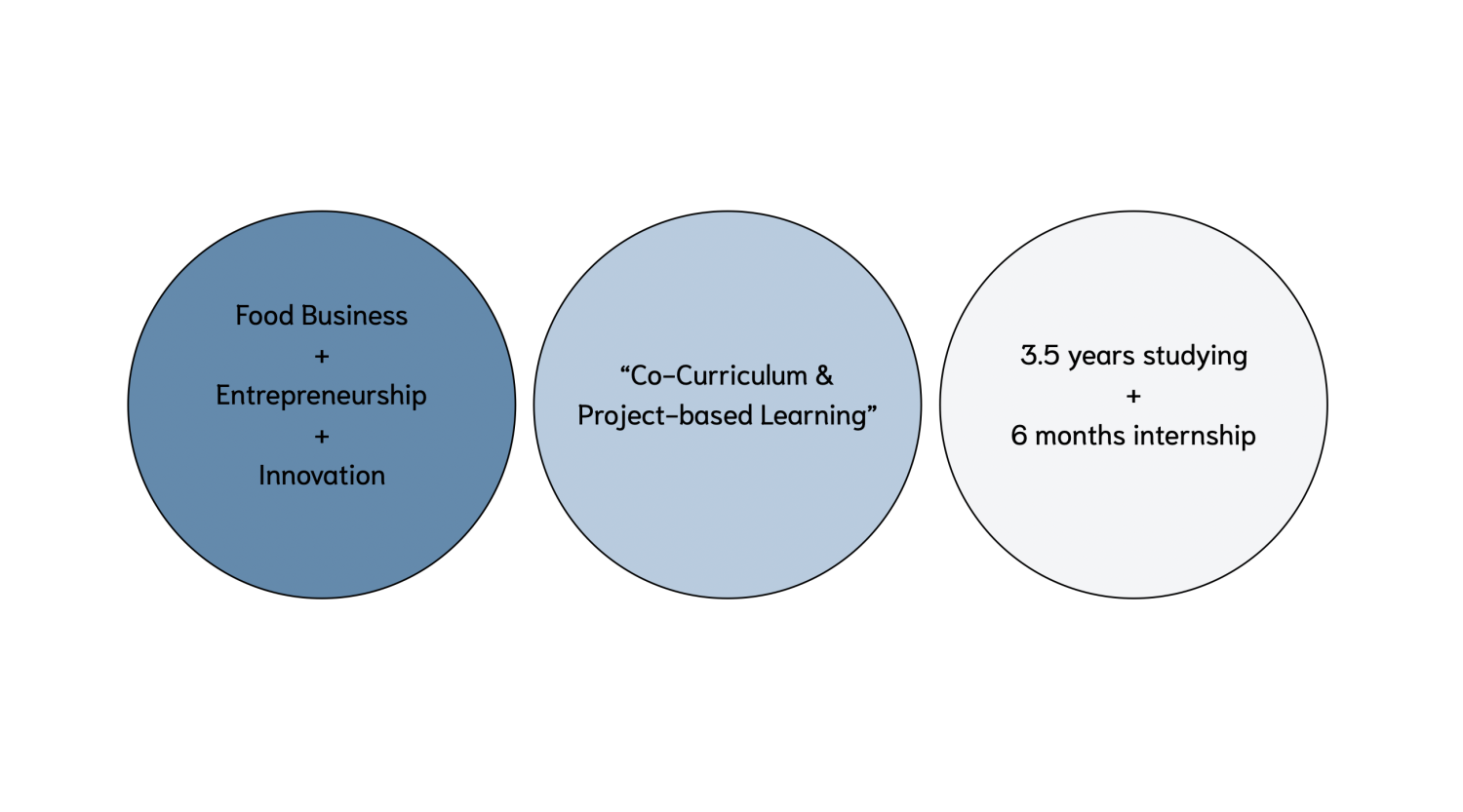 Why Chitralada Business School?
Nowadays, consumers place greater emphasis on food quality, experience, and sustainability than ever before. The food industry requires a new generation equipped with creativity, business acumen, and technological understanding to drive innovation and create new value in food products and services.
In response, the Faculty of Business Administration offers two majors: Food Innovation Management and Food Business Entrepreneurship, with the mission of cultivating students into true innovators and entrepreneurs who can effectively respond to the rapidly evolving food industry. This includes addressing:
The Faculty is committed to developing graduates with an “innovator’s mindset” and an “entrepreneurial spirit,” empowering them to create sustainable value for Thai food businesses and contribute meaningfully to the nation’s economic development.
We believe that “real experience” is the best teacher.
Therefore, our teaching and learning do not take place only in the classroom,
but occur wherever there are “real problems” and “real opportunities,”
so that students can grow comprehensively in knowledge, skills, and ways of thinking.